The Dutch House, by Ann Patchett
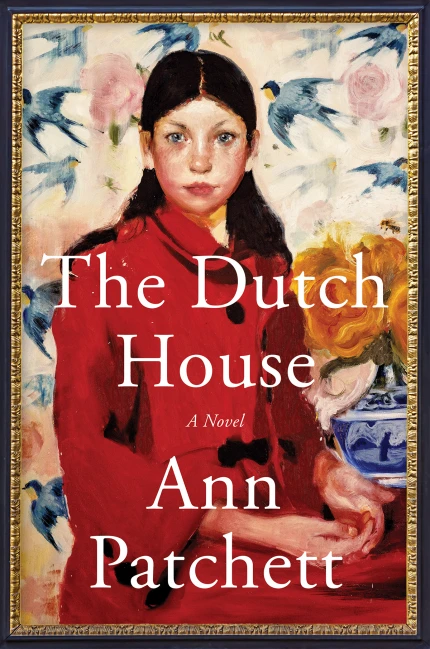
The Dutch House by Ann Patchett
My rating: 2 of 5 stars
“But nothing ever happens”
– “Lemon Tree” (Fool’s Garden)
I’m going to spoil this rather thoroughly, so proceed with mild caution.
Maeve and Danny are the children of Cyril and Elna Conroy. Cyril built a property empire from scratch, taking Danny along to collect rent in cash. Maeve, Danny’s older sister, is mostly sidelined and left in the care of “Fluffy”, the nanny, and the household staff, Sandy and Jocelyn.
»“Money,” our father said, nodding. It wasn’t a complicated idea.«
Elna is largely out of the picture after leaving, first periodically, soon permanently. While Danny is mostly unaffected due to not even remembering his mother, Maeve is desperate to see her again.
A few years after Elna leaves, Cyril marries his second wife, Andrea, who becomes Maeve’s and Danny’s evil stepmother. When Cyril unexpectedly dies, Andrea basically evicts everyone but her own two children, Norma and Bright, from the eponymous “Dutch House” and they build (mostly) independent lives. Good for them.
Unfortunately, that’s all that ever happens in this novel. Yes, the writing is fine and the narrative style is engaging and very sensitive at times…
»“There you are,” she said, and smiled at me. “How are you feeling?”
It would be years before I understood the very real danger of what had happened to me. At the time I saw the surgery as something between a nuisance and an embarrassment. I started to make a joke but she was looking at me with such tenderness I stopped myself. “I’m okay,” I said. My mouth was sticky and dry.
“Listen,” she said, her voice quiet. “It’s me first, then you. Do you understand?”
I gave her a loopy smile but she shook her head.
“Me first.”«
… but I’m sorry, that’s just not good enough. The blurb promises this:
»The Dutch House is the story of a paradise lost, a tour de force that digs deeply into questions of inheritance, love and forgiveness, of how we want to see ourselves and of who we really are.«
This is simply not true. The “Dutch House” never was a paradise for any person in this novel. The house is “paradise” only as a symbol (wealth, safety, belonging), but emotionally it’s contested and poisoned.
»The house is a piece of art.«
The simple fact that the novel tries to cover about 50 years in standard novel length (about 300 pages) does not make it “a tour de force” but only succeeds to ensure that the story about Maeve, as the narrator Danny puts it, leaves her as a thin, unexplored, shallow character. Even if we follow the blurb and take the other characters into this, it still keeps scratching the surface of family dynamics and character exploration.
There simply are no “deep digs” into anything just because the story doesn’t even have enough room to develop fully. Love, death, forgiveness (and too many other aspects); yes, they’re all there but just as part of life, not as something that deserves room to be shown, observed, and evaluated.
In its current form, “The Dutch House” simply depicts primarily two lives unfolding. That’s fine, but it’s far from enough.
Two stars out of five.

