A Murder in Springtime (Bruno, Chief of Police #19), by Martin Walker
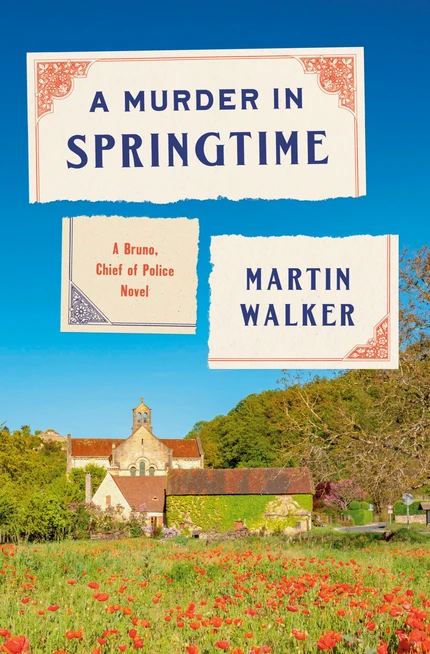
A Murder in Springtime by Martin Walker
My rating: 2 of 5 stars
Less murder mystery than background noise in St. Denis.
“A Murder in Springtime” ought to have been a return to what these Bruno novels used to do well: a local crime, a lived-in village, familiar people, and a mystery that actually matters more than the garnish around it.
Instead, I found myself trudging through a novel that seemed oddly embarrassed by its own murder plot, forever wandering off into side-business, social clutter, stale emotional nonsense, and the usual namedropping of recurring figures who barely justify their presence. The international spy absurdity may be gone, and that is a mercy, but Walker has not replaced it with focus.
»It might not have been quite like the old days«
No kidding. That line lands almost like an accidental confession. The book keeps gesturing towards the older, better Bruno formula, but it never really recovers it. The murder feels secondary for far too long, and by the time the solution arrives, it feels less earned than dropped into the characters’ laps. That would already be disappointing in a generic village crime novel, but it is especially maddening in a series that used to understand the appeal of place, rhythm, and human-scale investigation.
Fabien, a new colleague and quickly a friend, at least, comes off rather well here, and I liked him more than I expected to. Bruno, on the other hand, increasingly sounds less like Bruno and more like Martin Walker himself grumbling through a puppet. When Bruno declares, »But I’m an elder millennial«, the effect is unintentionally hilarious, because nothing in the novel makes him sound remotely like that. A moment later, »Why, because I’m in my forties« only makes it worse. He reads like a much older man shaped by his author’s voice, not like a convincing character speaking naturally inside his own series.
There are also individual moments that perfectly capture the book’s deeper problems. One sentence observes that »the loss of life had been minimal, the only two confirmed deaths a cybercriminal and his brother.« That rubbed me the wrong way instantly, and it typifies the novel’s moral and emotional slackness: By calling the deaths of “a cybercriminal and his brother” a “minimal” loss of life, the novel implies that those lives mattered less and turns human beings into morally discounted casualties. Every person’s life carries the same moral weight.
Elsewhere, »The morning passed in a blur of activity.« could stand as a summary of the whole book: plenty of motion, very little substance. And yet, maddeningly, Walker can still stumble into the occasional enjoyable scene, as with »By the time the méchoui was ready, the hordes were salivating«, which reminds me why I keep reading these books in the first place.
Compared with stronger police procedurals, and even compared with earlier Bruno novels, this feels shapeless, trivial, and dramatically thin and light. Too much relationship drama, too much miscellaneous fuss, too little mystery. I honestly thought about giving up by the epilogue, and I can’t say the novel rewarded my persistence.
Two very generous stars out of five.
Ceterum censeo Putin esse delendam
View all my reviews


2 thoughts on “A Murder in Springtime (Bruno, Chief of Police #19), by Martin Walker”