But For The Grace (D.C. Smith #2), by Peter Grainger
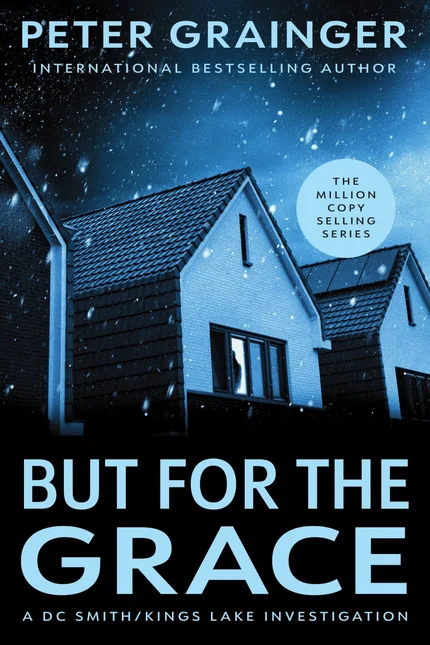
But For The Grace by Peter Grainger
My rating: 3 of 5 stars
I still like Detective Sergeant DC Smith, and I will keep reading the series. That makes this a disappointing instalment rather than a farewell: “But for the Grace” has not changed my affection for Smith, but it has tested my patience.
“An Accidental Death” (review) took time to get going, too, but eventually the investigation acquired force as Smith followed details others had missed. Here, the whole novel feels slow. The plot stays close to one care home and a sustained argument about assisted suicide, but it rarely turns that material into forward motion. We spend a great deal of time in and around a home whose residents receive unusually expensive care. The phrase »not the cheapest place by a long way« is almost a miniature of the book’s enclosed world: comfortable, quiet, and short on urgency.
Assisted suicide is not an abstract subject to me, and I do not consider its basic moral status unresolved: it must be a right, not something punished by the criminal law. Grainger gives the question considerable space, touching on »assisted dying and assisted suicide« and the law’s »virtually invisible line«. I understand the intended tension, but it left me cold. Repeatedly revisiting whether compassionate intentions can excuse an offence is not a substitute for a compelling crime plot, especially when I do not accept that the act ought to be treated as an offence in the first place. Smith’s own response, »The whole thing, age, sickness, dying«, captures the weariness of the book as much as its subject.
The personal threads do little to quicken things. Beyond the central question, the plot offers little variety: an offer Smith is not yet ready to refuse, a lukewarm encounter with a woman, and a case that feels closer to a non-crime than to a conventional investigation. Neither strand develops enough energy to counterbalance the long stretches of discussion and care-home routine. I kept waiting for the investigation to become more substantial, or for Smith’s choices to give the story a sharper shape.
Smith remains the reason I have not given up. He is still observant, stubborn, and quietly funny, and I like spending time with him even when the case around him is not doing enough. In my review of “An Accidental Death”, I described him as difficult to stop once underestimated; that still holds. The difference is that the first book’s slow start eventually paid off. This one is not merely slow at the beginning; it stays slow.
“Dead Memories” (review) by Angela Marsons and “Talking to the Dead” (review) by Harry Bingham were useful genre contrasts in my previous review: more urgency in the former, more psychological intensity in the latter. Grainger’s quieter, more local approach remains distinctive, but here the restraint tips into inertia. I still want to see what Smith does next. I just hope the next case gives him, and the reader, more to pursue.
A weary three out of five stars.
Ceterum censeo Putin esse delendam
View all my reviews

