The Politician (The DS Cross Mysteries #4), by Tim Sullivan
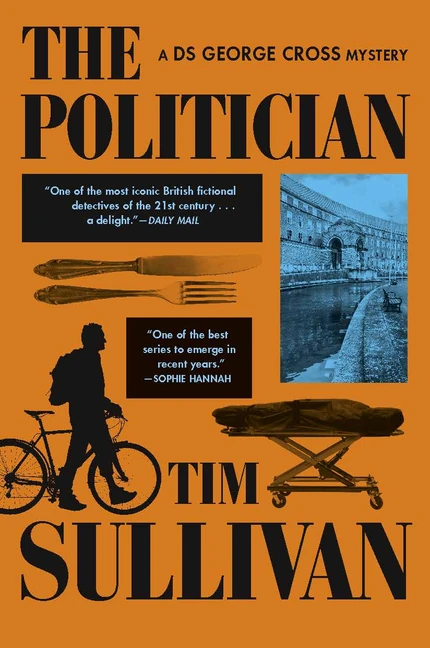
The Politician by Tim Sullivan
Five stars out of five, and a favourite.
The fourth DS Cross novel gives Tim Sullivan a familiar detective and a case with a fresh public face. Former mayor Peggy Frampton is found dead after what appears to be a burglary. Her polarising public profile, the online abuse directed at her, and the complicated people around her create a broad field of possible motives. The political backdrop feels current, but the case stays rooted in people and evidence.
George Cross remains the series’ centre. His autism shapes how he parses evidence and how literally he handles conversation. One exchange catches both his precision and the comic friction it can create:
»You do not have vertigo, I assure you.«
The correction is entirely sincere; the other person’s exasperation is part of the joke. Sullivan makes the humour emerge from the mismatch between exactness and social tact, never from asking us to laugh at Cross. The awkwardness is real, but it never cancels the usefulness of his precision; instead, the team’s small negotiations feel human.
The hostility surrounding Frampton is more than background colour; it makes the possible suspect list feel limitless:
»the list of suspects would number into their hundreds«
Now that the team is familiar, the story can let Cross interact with them without pausing to explain their established roles. That is a good use of series continuity: the case has the scope of a public scandal, but the relationships keep it intimate. I like the way Sullivan balances a wide field of suspicion with close character work.
That connection gives the case a contemporary texture while keeping its procedural stakes personal and concrete. Compared with “The Patient” (Review), which I loved for its compassion and quiet steadiness, “The Politician” has more friction and a livelier comic current. It also builds on “The Cyclist” (Review): by now, the team’s relationships need less introduction, so Cross’s exact way of reading people and evidence can sit at the centre from the start. Sullivan’s attention to character keeps the clues from feeling mechanical. The result is an especially satisfying blend of case, character, and humour. Sullivan has made Cross familiar without making him predictable; I finished the book eager to spend more time with him.
Five stars out of five, and a favourite.
Ceterum censeo Putin esse delendam

