The Ruin (Detective Cormac Reilly #1), by Dervla McTiernan
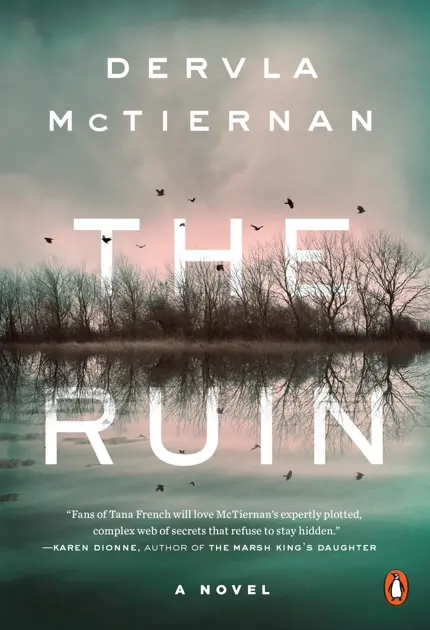
The Ruin by Dervla McTiernan
My rating: 4 of 5 stars
I picked up Dervla McTiernan’s “The Ruin” wanting a modern police procedural that actually feels like police work, rather than a string of convenient revelations, and this one delivered. It’s set in Galway, it’s wintry, it’s quietly grim without being gratuitous, and it has that satisfying sense of a case tightening like a screw. Better still, it reads like a complete novel, not a “series pilot” padded with placeholders. It’s dark, yes, but it never slides into misery tourism.
»I haven’t seen Garda Reilly in twenty years.’ And somehow that simple truth sounded more like a lie than anything else.«
Cormac Reilly is a solid centre of gravity: competent, dogged, and self-aware enough to notice when the institution is trying to steer him towards the easy answer. As the “new man” in Galway (transferred from Dublin), he’s both insider and outsider, which gives the story some welcome tension. People talk to him because he’s Garda, and they clam up because he’s not their Garda. McTiernan is very good at that small-town pressure, the way everyone knows something, but nobody knows it all.
»‘Cormac, it’s the bloody Garda Síochána.’«
What I liked most is the book’s emotional geometry. Aisling’s grief, Maude’s rage, and Cormac’s stubborn conscience aren’t just different viewpoints, they’re different moral pressures on the same events. When the story turns, it’s less about shock twists, and more about watching people reveal what they’re willing to do, and what they’ll tell themselves afterwards.
»Maybe even an accident involving a friend, who had panicked, and in guilt and fear made a stupid phone call to try to hide the truth.«
The prose is clean, but it’s not bland. The dialogue has bite, and the book keeps dropping lines that make a character feel instantly real. It’s also paced well: enough forward motion to keep me reading, and enough pauses for dread to gather in the corners. I liked that the violence (when it appears) feels consequential, not decorative.
»‘I’ve heard good things about you, Reilly,’ the Super was saying. ‘You’ve done very well.’ And that was patronising as fuck.«
If I’m nitpicking, there are a few moments where I could feel the author’s hand nudging pieces into place, and one or two secondary characters are more functional than vivid. Still, as police procedurals go, this is exactly my kind of thing, and it reminded me of the sweet spot between Tana French’s mood and Michael Connelly’s machinery. I finished it satisfied, slightly unsettled, and already queued up book two.
Four stars out of five.


2 thoughts on “The Ruin (Detective Cormac Reilly #1), by Dervla McTiernan”